
Some stories feel ancient because they are old. Others feel ancient because they keep finding us in every generation. The story of Adam, Eve, Cain, and Abel does both. It begins at the edge of creation, but it reaches into the questions families still carry today: What happens after failure? What does grief do to love? How does jealousy grow in silence? How does a parent survive the heartbreak of one child hurting another? That is why historical christian fiction books can hold such power for readers who want more than entertainment. They invite us to step inside familiar biblical moments and feel the dust, hunger, fear, tenderness, and sorrow behind the names we have heard for years. 📖
The first family of Scripture is not simply a religious reference point. It is a human story filled with beginnings, wounds, choices, consequences, and longing. A novel or novella inspired by this world can help readers slow down and consider the emotional weight inside the biblical account. When written with care, historical christian fiction books do not replace Scripture; they encourage readers to return to it with a more attentive heart.
Why the Bible’s First Family Still Speaks to Modern Readers
The opening chapters of Genesis introduce creation, the Garden of Eden, Adam and Eve, the fall, exile, Cain, Abel, and the first recorded murder. According to Britannica’s overview of Genesis, the early chapters of Genesis include what is often called primeval history, including creation, Adam and Eve, Cain and Abel, Noah, and the Tower of Babel. These stories are brief, but they are not shallow. They give readers the first picture of human love, labor, temptation, shame, worship, violence, and grief.
That is one reason historical christian fiction books can be so meaningful. They give authors room to imagine the emotional spaces between the verses. What did Eve feel when she held Cain as a baby after leaving Eden? What did Adam carry inside him as he worked the ground outside paradise? What did Abel learn from watching his family live with both memory and loss? What did Cain hear in his own heart before resentment became action?
Readers are drawn to biblical fiction because it often takes stories they know and makes them feel immediate. It does not have to add noise or invention for the sake of drama. The strength comes from slowing down, honoring the original account, and letting the humanity of the characters rise to the surface.
The Power of Historical Fiction in a Faith-Based Story
At its heart, historical fiction is fiction set in the past, often shaped by the details, customs, atmosphere, and social conditions of another time. In biblical fiction, that setting reaches back to the earliest stories of faith, where the world is young and every human action carries the weight of first things. The first birth. The first brother. The first offering. The first death. The first grave.
That is why historical christian fiction books have a special place in Christian storytelling. They are not only about period details. They are about spiritual imagination. They ask what it might have been like to live when humanity had no long history to lean on, no inherited map for grief, no family memory of death, and no ordinary language for exile.
A story about Cain and Abel becomes more than a tale of jealousy. It becomes a story about worship, comparison, loneliness, parental fear, and the terrifying speed with which inward bitterness can become outward destruction. A story about Adam and Eve becomes more than a story about disobedience. It becomes a story about love after failure, marriage after shame, and parenting outside the garden.
Why Cain and Abel Remain One of the Most Haunting Biblical Stories
The account of Cain and Abel in Genesis 4 is short, but it carries enormous emotional force. Cain works the ground. Abel keeps sheep. Both bring offerings. Cain becomes angry. God warns him about sin. Cain kills Abel. The ground receives blood. Cain is marked and sent away.
That brief sequence has shaped centuries of theological reflection, art, literature, and moral conversation. Britannica’s article on Abel identifies him as the second son of Adam and Eve, slain by his older brother Cain. Yet the Bible gives us only a limited number of details, which leaves readers with haunting questions. Did Adam hear the silence first? Did Eve know something was wrong before anyone spoke? Did Cain understand what he had done the moment Abel fell? Did the world itself feel different after blood entered the soil?
This is where historical christian fiction books can bring emotional depth without pretending to rewrite Scripture. They can explore grief, dread, confusion, and consequence. They can make the first family feel like a family, not distant figures carved into stained glass. Readers are able to sit with the ache of the story instead of rushing past it.
How Biblical Fiction Builds Trust with Readers
Strong faith-based fiction is not built on shock value. It is built on reverence, emotional honesty, and careful storytelling. Readers need to feel that the author respects the biblical source, understands the spiritual weight of the material, and cares about the people inside the story. This matters even more with historical christian fiction books because the audience is often looking for both story and substance.
Trust grows when the writing does not flatten biblical people into symbols. Adam is not only “the first man.” Eve is not only “the first woman.” Cain is not only “the murderer.” Abel is not only “the victim.” They are part of a family living through the first experiences of sin, shame, sacrifice, death, and separation. When an author gives them believable emotions and grounded choices, the story becomes more moving.
This kind of writing can also create stronger topical authority for a faith-based website. Articles that connect biblical context, literary purpose, reader interest, and trustworthy external resources can support a healthier content ecosystem. Search engines reward content that appears useful, relevant, and connected to reliable sources. Readers reward content that gives them something worth thinking about.
Why Readers Are Returning to Faith-Filled Fiction
Faith-based fiction continues to reach readers who want stories with moral depth, emotional meaning, and spiritual reflection. Publishers Weekly reported in 2026 that Christian fiction publishers have seen strong interest in dual-timeline and time-slip novels, with stories that move across decades or centuries while still carrying Christian values. Another Publishers Weekly article also noted that some Christian novelists are reaching readers of various faith backgrounds, including those who are drawn to clean or faith-shaped storytelling.
That matters because historical christian fiction books can speak to more than one kind of reader. Some readers come because they already love Scripture. Some come because they enjoy ancient settings. Some come because they want fiction that wrestles with guilt, mercy, justice, grief, and hope. Some come because they want a story that feels meaningful without feeling preachy.
Biblical fiction has the ability to meet all of those readers when it is written with depth. It can be literary, emotional, reverent, and accessible. It can invite a lifelong believer to see a familiar passage with fresh eyes. It can also invite a curious reader to understand why these stories have lasted for so long.
The Role of Grief, Silence, and Consequence in the First Family
One of the most compelling parts of a Cain and Abel retelling is the silence around the aftermath. Scripture tells us what happened, but it does not give us long scenes of Adam and Eve mourning Abel. It does not tell us how Cain’s absence changed the shape of the family. It does not show every conversation that never happened. The silence itself becomes part of the story.
That is why historical christian fiction books can be so powerful when they explore the first family. Grief was new to them. Death was not a normal part of life yet. Adam and Eve had already lost Eden, but then they lost a son, and in another way, they lost Cain too. The first parents became the first grieving parents. The first brothers became the first broken brotherhood.
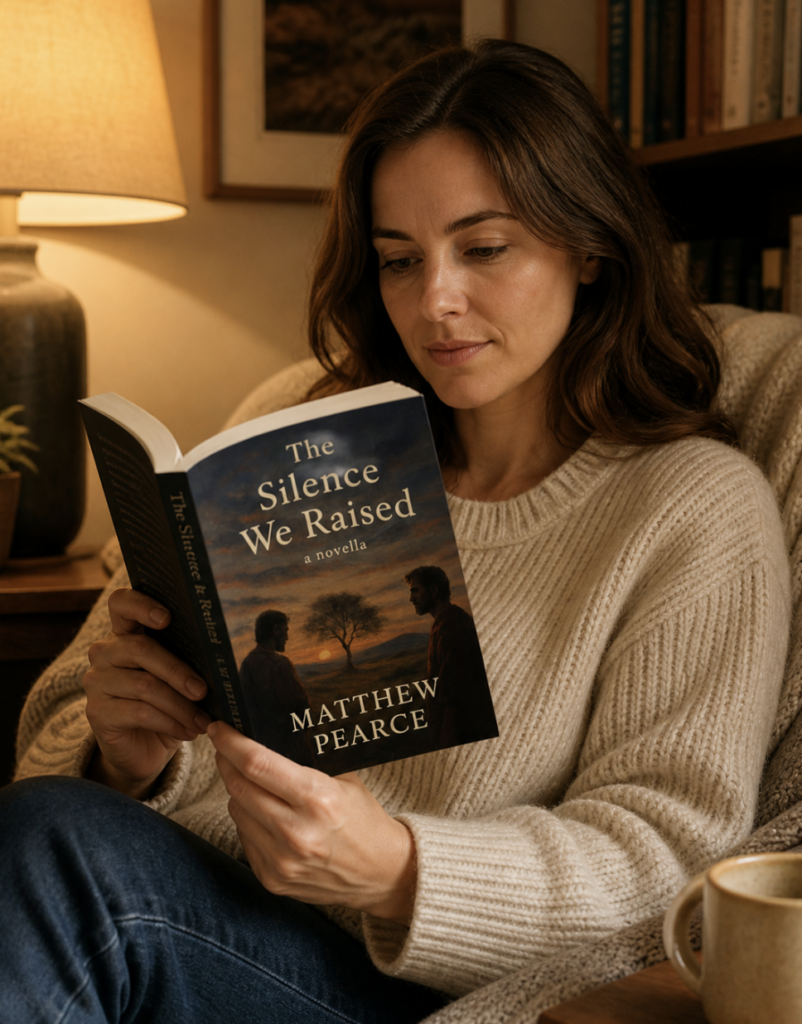
A book like The Silence We Raised fits into this emotional territory by approaching Cain and Abel not merely as a crime, but as a family tragedy. The story’s power comes from the pain of what cannot be undone and the silence that follows a wound too deep for easy answers.
Why Scripture-Based Storytelling Still Matters
The continued importance of biblical themes is not limited to church settings. According to Pew Research Center, many Americans still describe the Bible as important in their lives, especially across Christian communities. That means stories rooted in Scripture can still speak to readers who want fiction connected to faith, moral reflection, and spiritual memory.
Historical christian fiction books help bridge that space between ancient text and modern imagination. They can turn a short passage into a lived experience. They can help readers feel the cost of envy, the ache of exile, the tenderness of family, and the holiness of choices made before God. They can remind us that the Bible’s earliest stories are not small stories. They are foundational stories.
This kind of fiction can also serve readers who struggle to connect with biblical narratives because the distance feels too great. A well-written retelling can make the world of Genesis feel close without making it casual. It can show the dust beneath Adam’s feet, the strain in Eve’s hands, the unease in Cain’s chest, and the innocence around Abel’s offering.
What Makes a Biblical Retelling Worth Reading
A strong biblical retelling should not feel like a costume placed over a modern story. It should feel rooted in the emotional, spiritual, and moral world of the source. The best stories in this genre understand that restraint can be more powerful than excess. They do not need to explain everything. They do not need to make every character easy. They do not need to soften every consequence.
Instead, they let readers wrestle. They allow sorrow to remain sorrow. They allow judgment to feel heavy. They allow love to exist even when a family is fractured. They help readers remember that faith-based fiction can be beautiful, serious, tender, and unsettling all at once.
For readers who are drawn to stories about the Bible’s first family, the appeal is not simply the ancient setting. It is the chance to enter the emotional center of a story that has shaped human imagination for generations. Cain and Abel are not distant figures when the story is handled with care. They become brothers again. Adam and Eve become parents again. The ground, the offering, the silence, and the exile become heartbreakingly close.
Conclusion
This kind of biblical fiction is more than a category on a bookshelf. It is an invitation to slow down and feel the humanity inside sacred history. Through stories inspired by Adam, Eve, Cain, and Abel, readers can step into the emotional aftermath of Eden, the ache of the first family, and the grief that followed the first act of violence.
The strongest biblical retellings do not pull readers away from Scripture. They make readers want to return to it with deeper attention. They take ancient stories seriously enough to imagine the tears, fears, hopes, and consequences that surround them. For anyone who loves biblical storytelling, emotional fiction, and faith-shaped literature, The Silence We Raised offers a haunting look at the first family and the silence left behind after Abel’s blood touched the ground.