
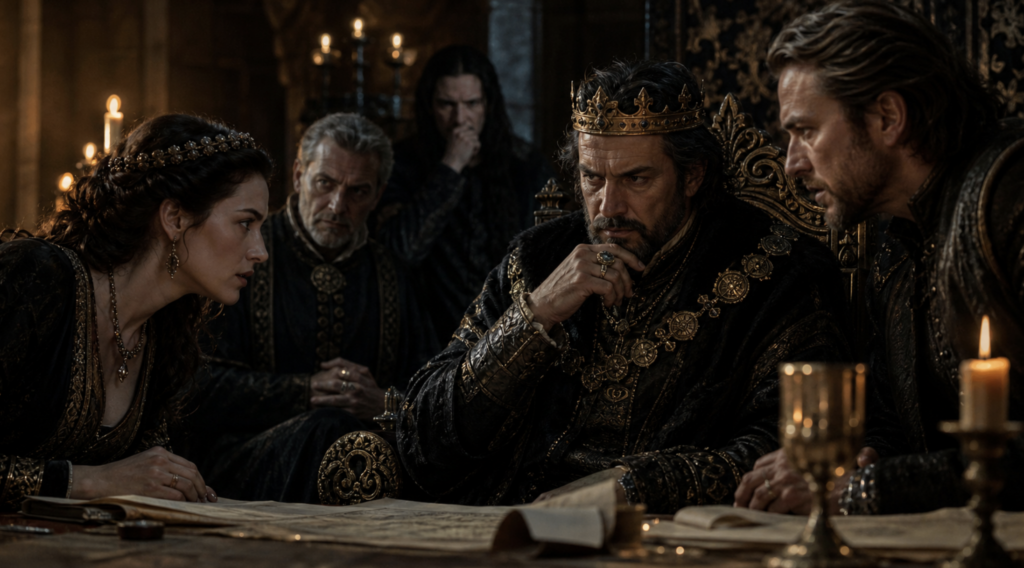
Political power can make a fantasy novel feel bigger, sharper, and more dangerous. A dragon can burn a village, a sword can win a duel, and a spell can turn the tide of battle, but political intrigue can threaten an entire kingdom before anyone draws a weapon. That is why readers love stories filled with secret alliances, royal councils, rival houses, hidden heirs, betrayals, and leaders who smile in public while sharpening knives in private. When done well, political intrigue fantasy gives a novel tension that moves beneath the surface, where every conversation carries risk and every decision changes the balance of power.
Writing this kind of story takes more than adding a corrupt king or a dramatic throne room scene. The politics must grow naturally from the world, the characters, the economy, the laws, the culture, the religion, and the fears of the people who live there. Political fiction has a long tradition of using power, governance, social conflict, and public life as engines for story, which makes political fiction a useful starting point for fantasy authors who want their imaginary worlds to feel grounded.
A strong political intrigue fantasy novel does not need to explain every law, treaty, or bloodline on the page. It needs to make the reader feel that those things exist, matter, and could destroy someone at any moment. The best political plots are not built on confusion. They are built on pressure. Someone wants the throne. Someone wants the truth buried. Someone wants revenge. Someone wants peace but is surrounded by people who profit from war. The writer’s job is to place those desires in conflict and let the consequences spread.
Start With Power, Not Just Politics
Political intrigue begins with power. Before you write the first betrayal, you need to know who has power, who wants power, who lost power, and who is pretending they have more power than they actually do. A fantasy government can be a monarchy, empire, council, theocracy, merchant republic, tribal confederation, military regime, magical order, or something completely original, but the structure must create tension.
A king who rules absolutely creates one kind of story. A queen who depends on noble houses for soldiers creates another. A magical council that controls who is allowed to learn spells opens the door to corruption, favoritism, rebellion, and black-market magic. A church that crowns rulers may have more influence than the crown itself. A merchant guild that controls grain during a famine may be more dangerous than any army. In political intrigue fantasy, the most important question is not simply who rules. It is who can make others obey.
The podcast Writing Excuses discusses how governments and power structures can shape speculative fiction, especially when writers think about control, enforcement, bureaucracy, and how characters navigate systems bigger than themselves in Governments Large and Small. Those systems matter because political tension usually comes from limits. A prince may want to do the right thing but cannot anger the generals. A rebel leader may want justice but needs money from a cruel noble. A priest may know the truth but risks destroying the public’s faith if it comes out.
When you build power into your world, avoid making it too simple. Real power rarely sits in one chair. It moves through marriage, military loyalty, land ownership, debt, bloodlines, religion, trade routes, old promises, public opinion, and fear. The more pressure points your world has, the more opportunities you have for intrigue.
Give Every Faction a Reason to Exist
A political story becomes stronger when every major faction believes it has a good reason for what it does. A noble house may seem greedy, but maybe its lands are poor and its people are starving. A rebellion may seem heroic, but maybe its leaders are willing to sacrifice innocent villages to win. A queen may seem ruthless, but maybe she knows that mercy will invite invasion. When each side has a motive that makes sense, the story feels richer and more believable.
For political intrigue fantasy to work, factions should not exist just to give the hero obstacles. They should have history, wounds, ambitions, resources, and fears. A faction that wants independence from the empire should have cultural reasons, economic reasons, and emotional reasons. A faction loyal to the empire should also have reasons beyond “they are bad.” Maybe the empire built roads, ended famine, or protected the border from something worse. That tension gives your reader something to think about.
Factions also need internal conflict. A rebel movement may have one branch that wants reform and another that wants blood. A royal court may have older nobles who value tradition and younger nobles who want trade, magic, or military expansion. A religious order may be divided between sincere believers and political opportunists. Those internal divisions give you more room for secrets, deals, betrayals, and shifting alliances.
This is where writers can learn from political storytelling outside fantasy. MasterClass notes that political fiction works best when the political landscape influences the narrative instead of sitting in the background as decoration in How to Write Political Fiction. That advice applies directly to fantasy. If politics can be removed from the story without changing the plot, the intrigue is not deep enough yet.
Make the Stakes Personal
A throne is interesting. A treaty is useful. A war council can create tension. But readers connect most deeply when political conflict becomes personal. A princess voting against a grain tax may be making a policy decision, but the scene becomes stronger if her childhood nurse came from the starving region that tax would crush. A general choosing whether to betray the king becomes more powerful if the king once saved his life. A spy leaking information becomes more memorable if the leak protects her brother but endangers thousands.
Political intrigue fantasy should always connect public consequences to private wounds. The kingdom may be at risk, but the reader should also understand what each decision costs the characters emotionally. A marriage alliance is not just a political arrangement if the bride loves someone else, fears the foreign court, or suspects her new spouse helped murder her father. A peace treaty is not just a document if it requires the hero to forgive the family that slaughtered his village.
This is how political scenes avoid becoming dry. Instead of writing pages of policy debate, write scenes where policy becomes a blade pressed against someone’s life. Who gets protected? Who gets sacrificed? Who benefits? Who pays? Who has to live with the decision afterward?
The best intrigue often comes from characters who are forced to choose between two values they truly believe in. A ruler may value justice and stability. A soldier may value loyalty and truth. A priest may value mercy and doctrine. When politics forces those values into conflict, the story gains emotional force.
Use Information as a Weapon
Political intrigue is not only about armies and crowns. It is also about information. Secrets, rumors, forged letters, hidden witnesses, old records, coded messages, and selective truth can all change the direction of a story. In political intrigue fantasy, information should move through the world with consequences. A rumor whispered in a tavern might weaken a prince. A sealed letter might start a war. A hidden birth record might destroy a dynasty.
Writing Excuses describes political intrigue as worldbuilding where information and misinformation affect the shift of power in Political Intrigue. That idea is incredibly useful for fantasy writers because it reminds us that intrigue is not just about what happens. It is about who knows, who lies, who suspects, who stays silent, and who controls the story everyone else believes.
A good political plot often depends on unequal knowledge. The reader may know something the council does not. The villain may know something the hero does not. The queen may know a secret but misunderstand what it means. A spy may discover the truth too late. These gaps create suspense because the reader sees danger forming before every character can name it.
Be careful, though. Intrigue should not depend on characters acting foolishly just so the plot can continue. Give them reasonable blind spots. Maybe a character trusts the wrong person because of shared history. Maybe a kingdom ignores a warning because the messenger belongs to a hated people. Maybe a ruler dismisses a threat because admitting it would expose an older crime. Good intrigue grows from believable human weakness.
Build a World Where Politics Touches Daily Life
Fantasy politics should not live only in castles. The reader should feel the results in markets, farms, temples, schools, docks, military camps, and family homes. A new ruler might change taxes. A war might raise grain prices. A magical ban might make healers illegal. A border dispute might separate families. A royal scandal might lead to arrests in the street.
A world feels more real when political decisions reach ordinary people. Brandon Sanderson’s worldbuilding guidance often emphasizes building worlds through practical tools and consequences, and his lecture notes on worldbuilding tools are helpful for writers thinking through how setting details shape story. In a fantasy novel, laws and power structures should leave marks on the world. Readers should see who is hungry, who is afraid, who is favored, and who has learned to keep quiet.
This also gives your protagonist more to react to. Instead of only hearing that the empire is cruel, the hero might watch soldiers take winter stores from a village. Instead of being told that the magical council is corrupt, the reader might see a poor child denied training while a noble child is welcomed despite having less talent. Instead of hearing that the church controls the crown, the reader might see a king hesitate before speaking because a priest is standing beside the throne.
Political intrigue fantasy becomes stronger when public systems create private behavior. People bow differently. People hide books. People change their names. People marry strategically. People refuse to speak near servants. People burn letters. Those details make the politics feel alive.
Create Characters With Conflicting Loyalties
Political intrigue depends on divided loyalty. A character who wants only one thing and serves only one side can still be useful, but the most compelling political characters are pulled in more than one direction. They may owe loyalty to family, crown, faith, homeland, lover, army, mentor, child, or oath. The more loyalties they carry, the more painful their choices become.
A knight may serve the king but love the rebel leader. A princess may want peace but know her marriage will strengthen a tyrant. A mage may hate the council but fear what happens if magic becomes unregulated. A spy may betray a friend for the good of the realm, then wonder whether the realm is worth saving. These conflicts make political intrigue fantasy feel human rather than mechanical.
Do not make every character a mastermind. A court full of flawless strategists becomes tiring and unrealistic. Some people are brilliant. Some are vain. Some are frightened. Some are loyal to the wrong person. Some are trying to survive. Some misunderstand the game they are playing. A mix of intelligence, emotion, pride, fear, and desperation makes the political landscape feel believable.
Character flaws are especially valuable in this kind of story. Pride causes rulers to reject good advice. Grief makes people reckless. Shame makes people easy to manipulate. Ambition blinds people to danger. Love makes betrayal possible. The political plot should pressure each character’s weakness until something breaks.
Let Betrayal Grow From Motivation
Betrayal is one of the most powerful tools in political fantasy, but it should never feel random. A shocking betrayal works best when the reader can look back and see the signs. The betrayer needed money, feared exposure, loved someone in danger, resented being ignored, believed the hero would fail, or decided the enemy offered a better future. The betrayal hurts because it makes emotional and political sense.
In political intrigue fantasy, betrayal should change the story’s balance of power. It should cost something. A betrayed army loses a pass. A betrayed queen loses public trust. A betrayed rebellion loses its safe house. A betrayed friend loses the ability to believe in anyone. Betrayal should not be included only for drama. It should redirect the plot.
The strongest betrayals often come from characters who believe they are doing the right thing. A councilor may betray the king to prevent war. A brother may betray his sister because he thinks she will become a tyrant. A priest may expose a secret because he believes truth matters more than stability. These betrayals create moral complexity, which is exactly what political intrigue needs.
Keep the Plot Clear Even When the Politics Are Complex
Political stories can become confusing quickly. Writers may be tempted to introduce ten houses, five wars, three religions, eight claimants, and a century of backstory in the opening chapters. That usually overwhelms the reader. Complexity is good. Confusion is not.
The key is to give the reader one clear emotional line to follow. Maybe the protagonist must survive court. Maybe a young heir must find out who murdered the king. Maybe a rebel spy must stop a treaty. Maybe a disgraced knight must protect a queen who does not trust him. Once the reader understands the main desire and danger, you can gradually reveal the deeper political web.
Brandon Sanderson’s guide to plot is a useful resource for thinking about how story promises, progress, and payoff help readers stay engaged. Political intrigue needs that same discipline. If you promise a succession crisis, the story should keep moving toward meaningful turns in that crisis. If you promise a conspiracy, each discovery should either clarify the danger or make it worse.
Use names carefully. If every noble house has similar names, readers will struggle. If every council member speaks the same way, readers will forget who matters. Give factions clear identities, but avoid turning them into cartoons. One house may be known for ships, another for old blood, another for banking, another for military service, and another for religious influence. Those differences help the reader follow the game.
Use Dialogue Like a Duel
Court scenes, council meetings, private negotiations, and royal dinners can become some of the best scenes in a fantasy novel when the dialogue has tension. In political intrigue, people often cannot say exactly what they mean. They threaten politely. They flatter falsely. They ask harmless questions with dangerous motives. They offer gifts that are really traps.
A strong political conversation should have more than one layer. On the surface, two nobles may discuss a wedding. Underneath, they may be negotiating military support. Beneath that, one may be testing whether the other knows about an assassination. This layered dialogue creates suspense without needing a sword fight.
However, the reader still needs clarity. Do not make every sentence cryptic. Characters can speak plainly when the moment calls for it. The tension comes from what is at stake, not from making everyone sound mysterious. Let some characters be blunt. Let others be elegant. Let some lie badly. Let some say very little because silence is their strongest weapon.
Political intrigue fantasy often works best when dialogue changes the situation. After a conversation, someone should have gained leverage, lost protection, revealed a weakness, made an enemy, or misunderstood something important. If a political scene ends with nothing changed, it may need sharper stakes.
Study History Without Copying It Blindly
History is one of the best teachers for fantasy authors. Succession wars, religious conflicts, arranged marriages, revolutions, assassinations, colonial expansion, trade disputes, legal reforms, and court scandals can all inspire fantasy plots. Historical study can help you avoid shallow politics because real power is often messier, stranger, and more surprising than invented power.
The goal is not to copy one historical event and change the names. The goal is to understand patterns. What happens when a ruler dies without a clear heir? What happens when soldiers are loyal to generals instead of the crown? What happens when religious authority and political authority collide? What happens when a government depends on money from people it publicly despises?
Writer’s Digest offers useful discussion of how politics and worldbuilding intersect in speculative fiction in Politics and World-Building in Science Fiction and Fantasy. The more a writer understands how power affects culture, identity, law, and survival, the easier it becomes to build a fantasy world where political conflict feels real.
History can also help you avoid making modern assumptions without meaning to. A medieval-inspired kingdom will not think about citizenship, privacy, marriage, religion, class, or law exactly the way a modern democracy does. You can absolutely write a fantasy world with modern values, but the world should still have internal logic. If your characters challenge their culture, show what that costs them.
Balance Magic With Political Consequences
Magic changes politics. If magic exists in your world, it should affect law, war, class, religion, medicine, education, crime, and leadership. A kingdom with truth spells will handle trials differently. An empire with teleportation magic will control borders differently. A church with healing magic will have enormous influence. A noble family with dragon-blooded heirs may build its entire claim to rule around that power.
Political intrigue fantasy becomes more original when magic is not just decoration. Ask how magical power is regulated. Who is allowed to use it? Who teaches it? Who fears it? Who profits from it? Who has been harmed by it? Who wants it banned? Who wants it weaponized? Those answers create conflict.
Magic can also complicate secrets. If mind-reading exists, powerful people will develop defenses. If prophecy exists, rulers may manipulate it. If necromancy exists, murder investigations change. If magical contracts exist, diplomacy changes. The fun comes from thinking through the consequences and then using those consequences to create tension.
Be careful not to let magic solve every political problem too easily. If a truth spell can reveal every lie, then you need limits. Maybe it is illegal, painful, expensive, unreliable, religiously forbidden, or easy to manipulate. Limits protect the intrigue.
Make the Ending Pay Off the Political Web
A political plot needs a satisfying payoff. That does not mean every secret must be explained in a speech or every villain must confess. It means the major power struggles should reach meaningful consequences. A house falls. A ruler changes. A rebellion succeeds but fractures. A treaty saves one nation and condemns another. A hero wins the throne and realizes ruling is harder than resisting.
The ending should grow from the choices characters made throughout the book. If the protagonist survived by earning trust, that trust should matter. If the villain controlled information, their downfall may come from truth spreading beyond their control. If a faction was ignored for the whole story, it should not suddenly solve everything at the end unless you planted that possibility earlier.
The best endings in political intrigue fantasy often feel both surprising and inevitable. The reader did not see every twist coming, but once the truth is revealed, it makes sense. That is the reward of careful setup. Every alliance, insult, secret, debt, marriage, law, and rumor can become part of the final movement.
A strong conclusion also shows what changed. Political stories are about systems as much as individuals. If the hero defeats a corrupt ruler but leaves the same broken system untouched, that may be a deliberate tragic ending. If the hero creates reform, show the cost. If the hero chooses mercy, show who sees that as weakness. Power always leaves aftershocks.
Conclusion
Learning how to write political intrigue in fantasy novels begins with understanding that politics is not a backdrop. It is pressure. It is the force that decides who eats, who rules, who speaks, who hides, who marries, who fights, and who is remembered as a hero or traitor. When you build your fantasy politics around power, motive, consequence, and personal stakes, the story becomes more than a collection of court scenes. It becomes a living world where every choice matters.
The heart of political intrigue fantasy is conflict shaped by desire. Give every faction something to want. Give every character something to lose. Let information move like a weapon. Let magic affect law and power. Let betrayal grow from believable motives. Keep the story clear, even when the world is complex. Most importantly, make the political struggle personal enough that readers care not only who takes the throne, but what kind of world will exist afterward.
A fantasy novel filled with intrigue does not need endless exposition or impossible twists. It needs pressure that builds, choices that cost, and characters who are forced to reveal who they really are when power is on the line. That is what keeps readers turning pages. That is what makes political intrigue fantasy memorable.